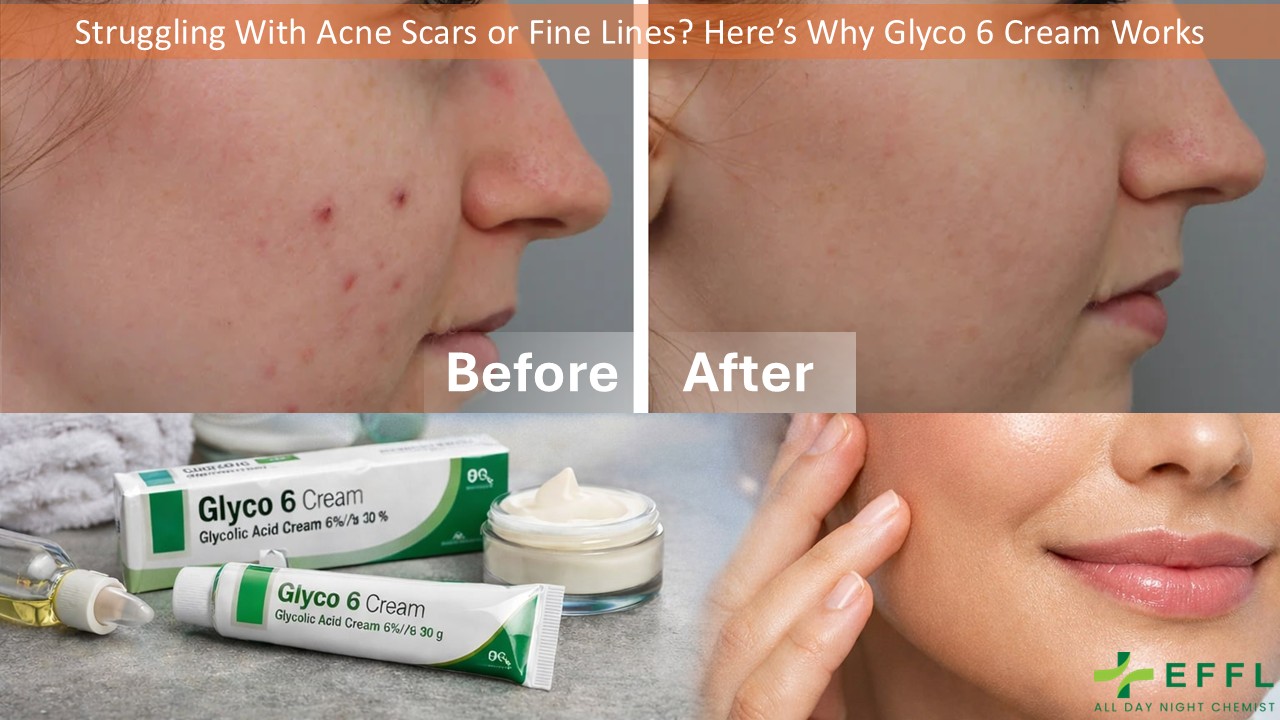
Struggling With Acne Scars or Fine Lines? Here’s Why Glyco 6 Cream Works

Clear, healthy skin is something most of us desire, yet concerns like acne scars, pigmentation, uneven texture, and early aging signs often stand in the way. While countless skincare products promise results, only a few actually address multiple skin issues at once. One such dermatologist-recommended product is Glyco 6 Cream.

What Is Glyco 6 Cream?

Glyco 6 Cream is a dermatological formulation containing 6% Glycolic Acid, an Alpha Hydroxy Acid (AHA) known for its exfoliating properties. It is commonly prescribed by dermatologists to treat concerns such as:

  • Acne scars and marks
  • Hyperpigmentation
  • Dull and uneven skin tone
  • Fine lines and early signs of aging

By gently removing dead skin cells, Glyco 6 Cream helps reveal fresher, smoother skin underneath.

How Glycolic Acid Works on the Skin

Glycolic acid penetrates deeply into the skin and works by:

  • Exfoliating dead skin cells
  • Unclogging pores
  • Boosting cell turnover
  • Stimulating collagen production

This multi-level action makes Glyco 6 Cream effective for a wide range of skin problems, rather than just one concern.

Benefits of Glyco 6 Cream for Different Skin Concerns

Acne Scars and Acne Marks

Acne often leaves behind stubborn scars and dark marks. Glyco 6 Cream helps by:

  • Lightening post-acne marks over time
  • Improving skin texture
  • Promoting new skin cell growth

With consistent use, acne scars appear visibly reduced.

Pigmentation and Dark Spots

Pigmentation caused by sun exposure, hormonal changes, or acne can make skin tone uneven. Glyco 6 Cream:

  • Reduces excess melanin buildup
  • Gradually fades dark spots
  • Helps even out skin tone

Dull and Uneven Skin Texture

A buildup of dead skin cells can make skin look lifeless. Glyco 6 Cream:

  • Gently exfoliates the skin
  • Enhances natural glow
  • Makes skin smoother and brighter

Fine Lines and Early Aging Signs

As we age, collagen production slows, leading to wrinkles and fine lines. Glyco 6 Cream:

  • Encourages cell renewal
  • Improves skin firmness
  • Reduces the appearance of early aging signs

This makes it a popular choice for maintaining youthful-looking skin.

How to Use Glyco 6 Cream Safely

For best results, proper usage is essential:

  • Apply a pea-sized amount at night on clean, dry skin
  • Avoid the eye area, lips, and broken skin
  • Start using it 2–3 times a week, then increase gradually
  • Always apply sunscreen during the day, as glycolic acid increases sun sensitivity

A patch test is recommended before first use.

Who Should Avoid Glyco 6 Cream?

Glyco 6 Cream may not be suitable for:

  • Extremely sensitive skin
  • Active acne or open wounds
  • Pregnant or breastfeeding women (unless advised by a doctor)

Why Glyco 6 Cream Works for Multiple Skin Problems

The effectiveness of Glyco 6 Cream lies in its multi-action formula:

  • Exfoliates dead skin
  • Improves skin texture
  • Enhances skin tone
  • Supports collagen renewal

This is why it works effectively for acne scars, pigmentation, dullness, and early aging signs—all with one product.
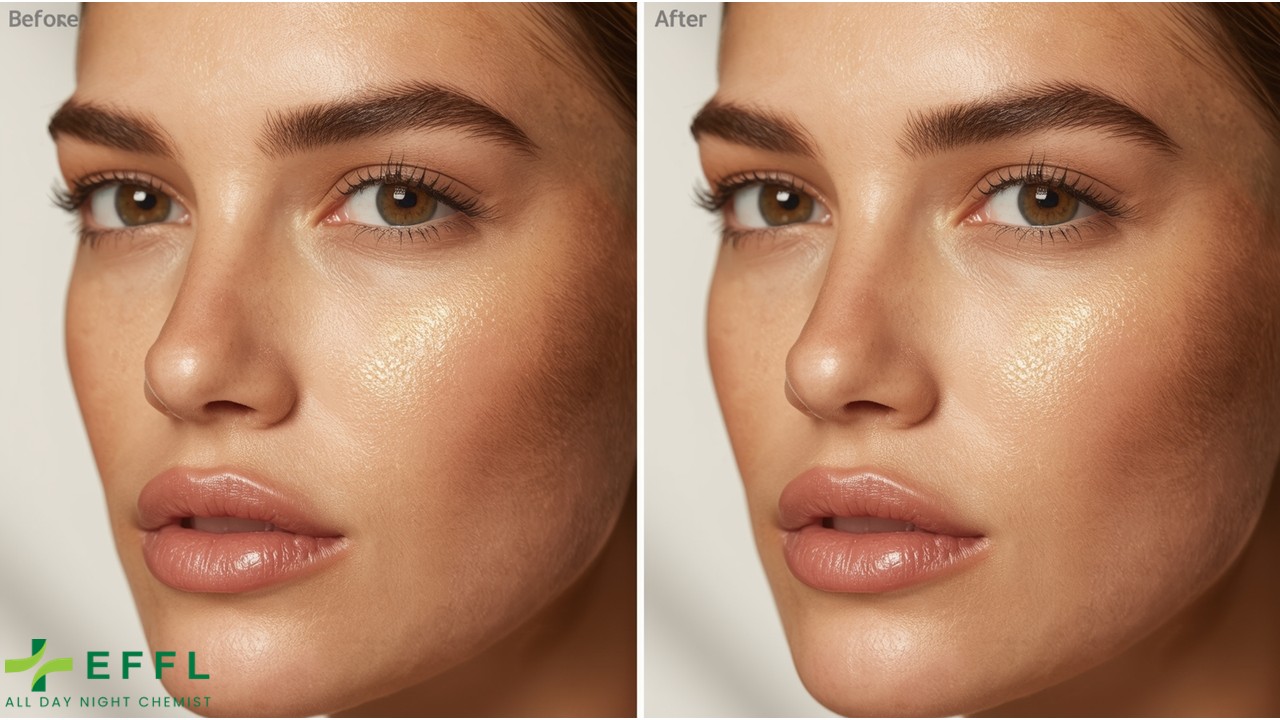
How to Fade Hyperpigmentation Fast: Expert Tips, Ingredients & Skincare Routine

Dark spots, acne marks, sun spots, melasma—no matter what form they take, hyperpigmentation is one of the most common skin concerns people experience. The good news? With the right care and consistency, you can fade it and stop new spots from forming.

What Exactly Is Hyperpigmentation?

Hyperpigmentation is an umbrella term for any area of skin that becomes darker than your natural skin tone.
These dark patches can show up as:

  • Spots left behind by acne
  • Sun spots (sometimes called liver spots)
  • Melasma (patchy pigmentation usually caused by hormones)

Hyperpigmentation can appear any time of the year. While summer sun is the most common trigger, winter irritation and dry air can also lead to inflammation that turns into dark marks.

Why Does Hyperpigmentation Happen?

As per dermatologists sun exposure is the #1 cause, especially on areas that get frequent sun like the face, chest, hands, and arms.

But UV rays aren’t the only culprits.

Pigmentation can develop due to:

  • Inflammation (think acne scars or bug bites)
  • Skin injuries
  • Genetics
  • Hormonal changes
  • Certain medications
  • Skin irritation from harsh products

In all these scenarios, the skin responds by activating melanocytes, the cells that produce pigment. More activity = darker spots.

What is Melasma?

Melasma is a more stubborn form of hyperpigmentation. It appears as blotchy brown patches, mainly on:

  • Cheeks
  • Forehead
  • Nose
  • Upper lip

It can also show up on the chest and arms.

Think of it this way:
 All melasma = hyperpigmentation.
But not all hyperpigmentation = melasma.

What Causes Melasma?

Unlike regular dark spots, melasma is heavily influenced by hormones.

Common triggers:

  • Pregnancy
  • Birth control pills
  • Hormone therapy (including treatment during menopause)
  • Heat and sun exposure
  • Stress

Melasma is often called “the mask of pregnancy” because many women first notice it during that time. Even after hormones stabilize, sun or heat can reactivate it—making melasma unpredictable and prone to flare-ups.

Treatment usually requires consistency and sometimes prescriptions like hydroquinone or oral tranexamic acid, under a dermatologist’s supervision.

Who Is More Prone to Hyperpigmentation?

Anyone can get hyperpigmentation, but people with medium to darker skin tones are more likely to develop it, and it can linger longer.

Genetics also plays a strong role—some people naturally produce more melanin in response to inflammation or sunlight.

How Do You Treat Hyperpigmentation and Melasma?

Both dermatologists recommend a simple foundational strategy:

Daily sunscreen + targeted skincare activities.

Your morning routine should include:

  1. Vitamin C serum
     Brightens skin, reduces free-radical damage, and helps fade dark spots.
  2. Sunscreen (SPF 30 or higher)
     Prevents spots from worsening and stops new ones from forming.

Over time, vitamin C can improve radiance, reduce fine lines, and even out skin tone.

How to Prevent Hyperpigmentation (Most Important Step!)

Treating dark spots takes time—but prevention is instant.

  • Use SPF 30 or higher every single day (even indoors—UV can pass through windows).
  • Reapply every 2–3 hours if you’re outdoors.
  • Wear hats, sunglasses, and sun-protective clothing.

Once your skin becomes prone to pigmentation, it can continue forming spots easily—so prevention is everything.

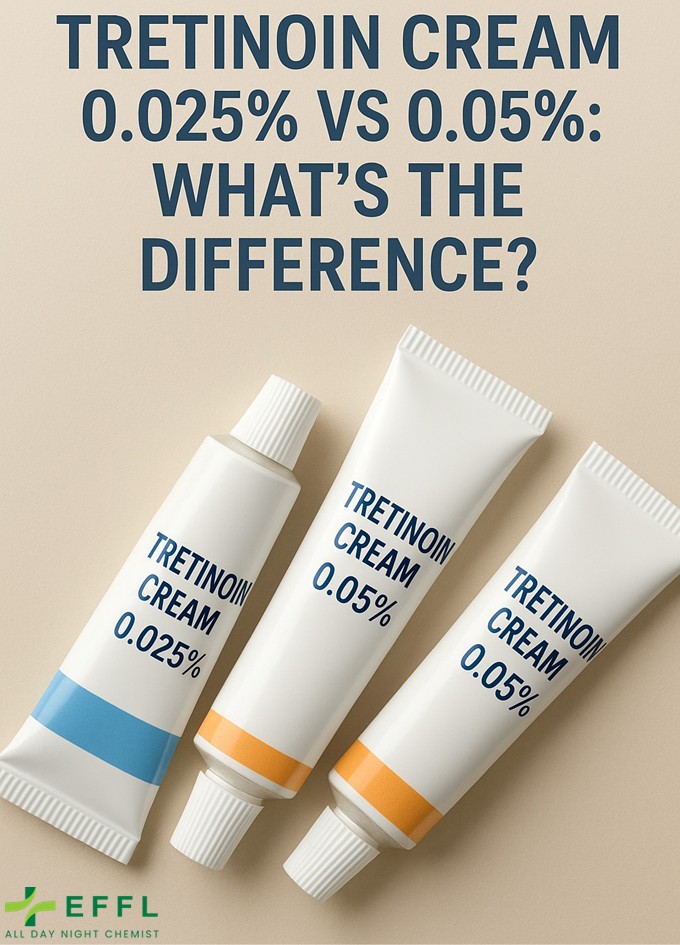
Tretinoin Cream 0.025% vs 0.05%: What’s the Difference?

If you’ve ever spent more than five minutes browsing for skincare that actually delivers, you’ve likely seen tretinoin crop up. Dermatologists adore it—it’s a vitamin A heavy hitter that fights acne, wrinkles, and skin discoloration. But then you see all the various strengths, such as 0.025% and 0.05%, and it’s not so easy to determine which one you should start with.

Let’s deconstruct it in simple terms.

Tretinoin Cream 0.025% — The Gentle Starter

The 0.025% strength is often the starting point for beginners to retinoids or those with sensitive skin. Dermatologists like to recommend this strength because it has a noticeable impact without overwhelming the skin.

What it does

Smooths fine lines and beginning wrinkles: It boosts collagen production, which allows the skin to stay firm and smooth.

Improves skin texture: Regular use can make rough or dull skin look brighter and more even.

Prevents acne and scarring: By keeping pores clear, it reduces breakouts and helps prevent acne marks from forming.

If you’re just starting your anti-aging or acne treatment journey, this strength is a good introduction.

Tretinoin Cream 0.05% — The Strong Performer

Once your skin adjusts, dermatologists can move you up to 0.05% to get deeper penetration. It acts more quickly and treats tougher skin problems at this level.

How it’s good for you

Fights acne more effectively: It keeps pores open and accelerates skin regeneration.

Decreases wrinkles and sun spots: Boosting collagen and cell turnover, it smoothes fine lines and textured skin.

Lightens dark spots: It slowly erases spots of hyperpigmentation and evening out the complexion.

It is also used by some dermatologists to treat keratosis pilaris — those tiny bumps on the arm or leg — by stopping keratin deposits in hair follicles.

How to Use It Safely

Tretinoin is potent, and patience is required. Put it on at night only, apply a pea-sized amount, and then follow this with a light moisturizer. During the day, never forget to apply sunscreen — your skin will now be more sun-sensitive.

Most importantly, see a dermatologist before you start using Tretinoin. He or she will tell you which strength to start with and how often to apply it.

Final Thoughts

Both 0.05% and 0.025% Tretinoin creams will transform your skin if they are used as directed. The weaker strength allows your skin to adapt to treatment, and the stronger one delivers more dramatic effects once your skin is mature enough to handle them.

Whether your goal — clearer, fewer wrinkles — consistency — and appropriate medical advice is crucial.

Sign Up For Newsletter

Join 60.000+ Subscribers and get a new discount coupon on every Saturday.

Free Easy Returns

Return to 7 days

Free Delivery

Orders over $199

All Day Support

24/7 Support care

Secure Checkout

100% Protected by paypa

At AllDayNightChemist, we are committed to delivering affordable, high
quality medications and healthcare products to your doorstep—anytime, anywhere. Trusted by
thousands globally, we offer a wide range of prescription and OTC medicines, health
supplements, and wellness essentials. With 24/7 customer support and secure shipping, your
health and convenience are our top priorities.

Socials

Copyright © 2024 . All Rights Reserved.

X
Add to cart